“Cultured” and “freshwater” are terms used to describe pearls formation and the environment they are formed in. While “cultured” represents the formation process of pearls, “freshwater” refers to the environment in which the pearls are formed.
There’s a belief that cultured pearls can be formed in freshwater, hence why some people say cultured pearls are the same as freshwater. Is it true?
In this article, we will discuss in detail cultured pearl vs freshwater pearl, highlighting what to believe and what not to believe, as well the major differences between them.
Cultured Pearls vs Freshwater Pearls: The Common Misconception
What is the difference between freshwater pearl and cultured pearl?
People get confused regarding cultured pearls vs freshwater pearls since some traditional jewelers refer to freshwater pearls as “cultured pearls” and Akoya pearls as “saltwater pearls”.
Quick Fact: Freshwater pearls are indeed a type of cultured pearls. There is no real difference when comparing cultured pearls vs freshwater pearls. The only concern is whether the freshwater pearls are natural or cultured, and whether they are formed in freshwater or saltwater environments.
Continue reading to understand better.
Natural Pearl vs Cultured Pearl: What’s the Difference?
Pearls are usually natural (organic) or cultured (man-made). Below is everything you need to know about natural and cultured pearls, how they are made, how to tell them apart, and so on.
What Are Natural Pearls?
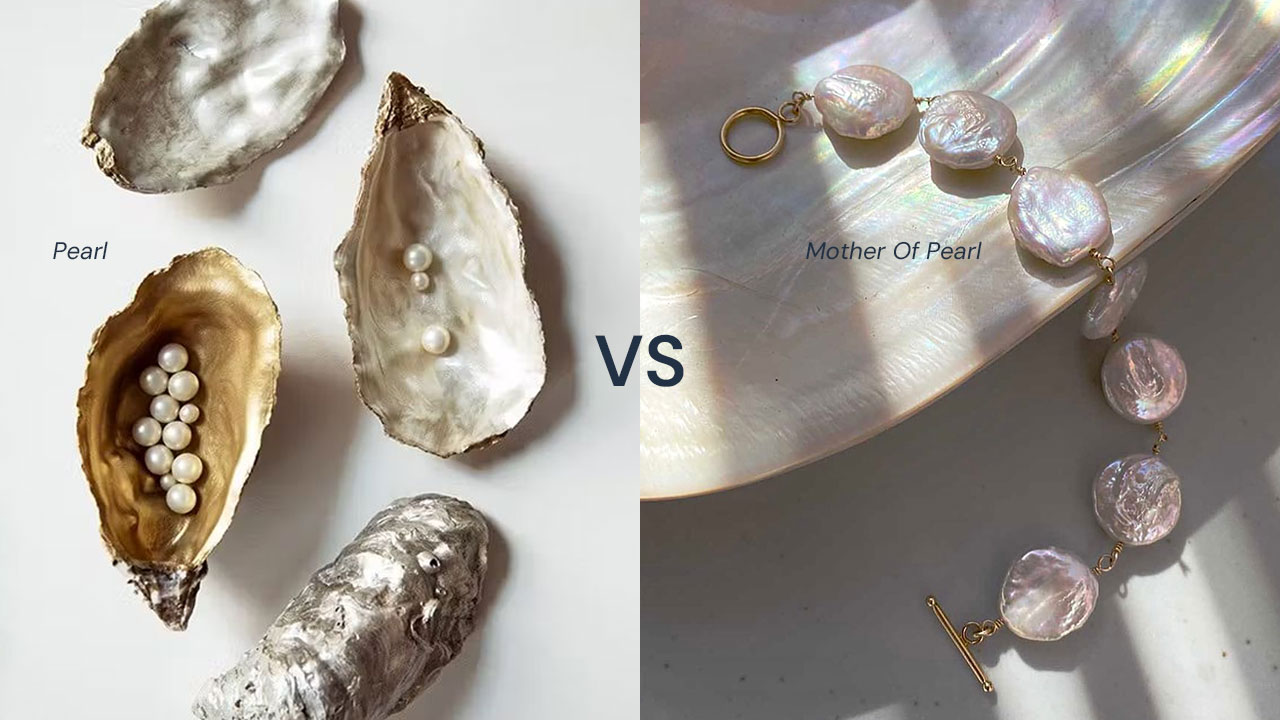
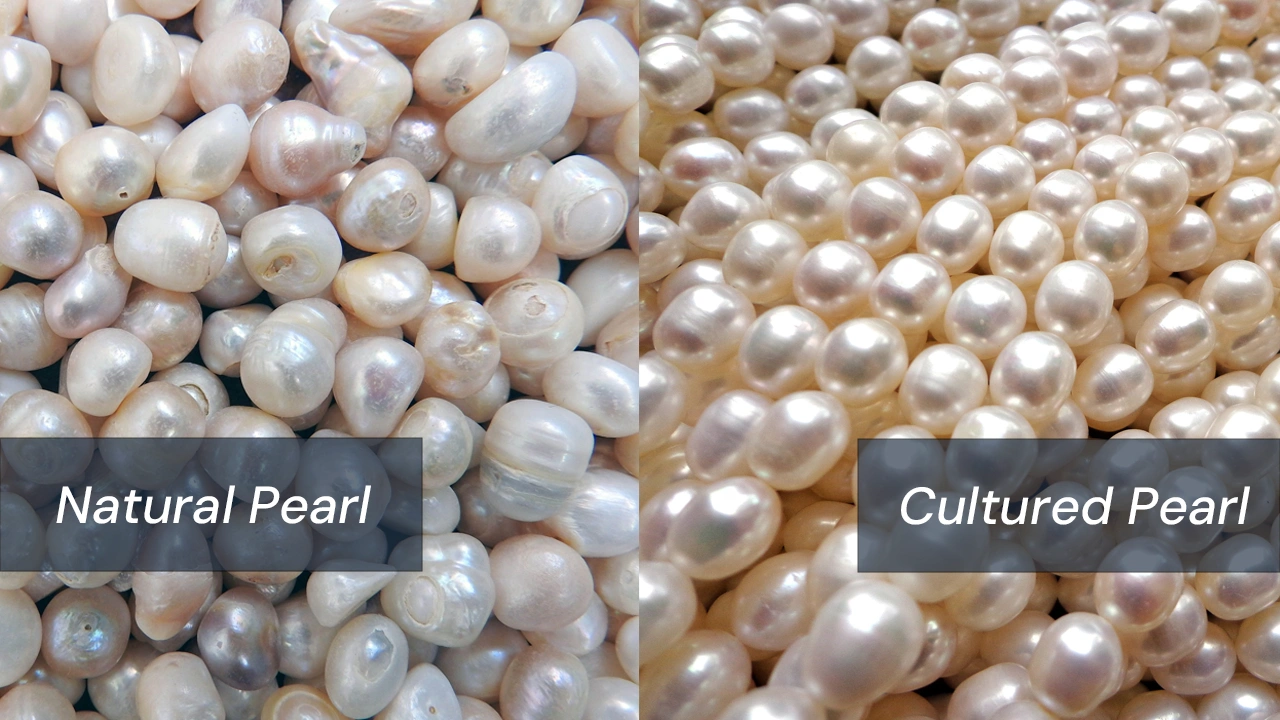
Natural pearls are the first type of pearls to exist. They are formed when an external irritant enters into a mollusk’s (oyster, mussel, or clam) shell. The mollusk sees the irritant as a parasite, and begins to secrete layers of conchiolin and aragonite (nacre) around the irritant. Over time, this results in pearls.
Grown in the wild without human intervention, natural pearls take a very long time to form and they are extremely rare to find. In fact most natural pearls on the market are antiques. And due to their rarity, they are quite expensive.
What Are Cultured Pearls? How Are Cultured Pearls Made?
Almost all pearls sold in the market today are cultured pearls. They are grown in pearl farms with human intervention.
Cultured pearls are made by placing equal sized beads or nucleus deep into a mollusk’s shell. The mollusk then coats the beads surface with layers of nacre until pearls are formed. This formation process only takes between 1-3 years to fully mature; hence the reason why the market is dominated by cultured pearls.
Cultured pearls are produced in both freshwater and saltwater. In other words, freshwater pearls, South Sea pearls, Tahitian pearls, and Akoya pearls can all be referred to as cultured pearls.
4 Main Types of Cultured Pearls
- Freshwater Pearls
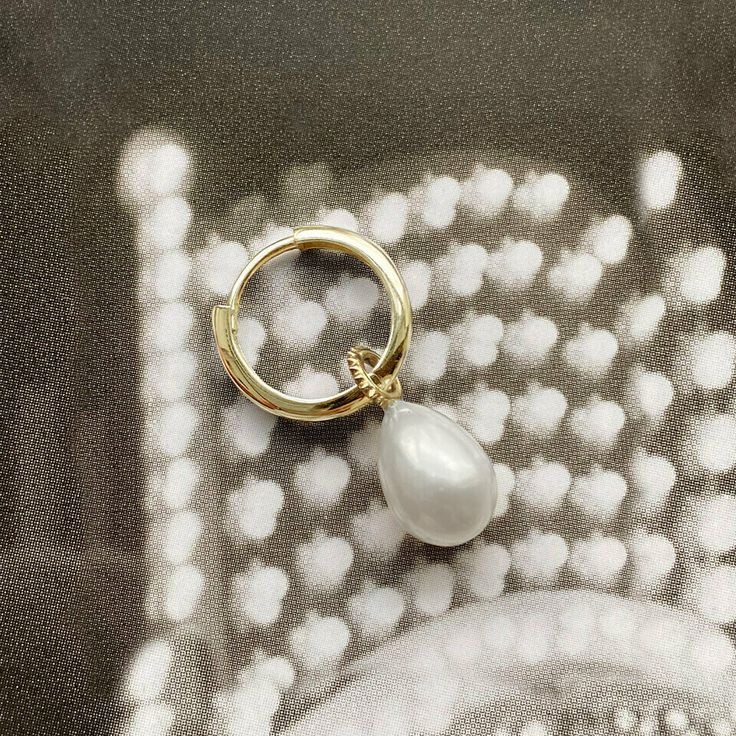
Just like the name, these pearls are products of freshwater mussels or clams. Freshwater pearls are the most common type of pearl and this is because multiple freshwater pearls can be produced in a single mollusk.
Their ease of availability makes them one of the cheapest pearls to come by in the market. Freshwater pearls are available in variations of shapes, color, and sizes.
Are freshwater pearls natural or cultured?
They can be both. While natural pearls form organically in freshwater environments like rivers, lakes, and ponds, they can also be influenced by human intervention.
- South Sea Pearls
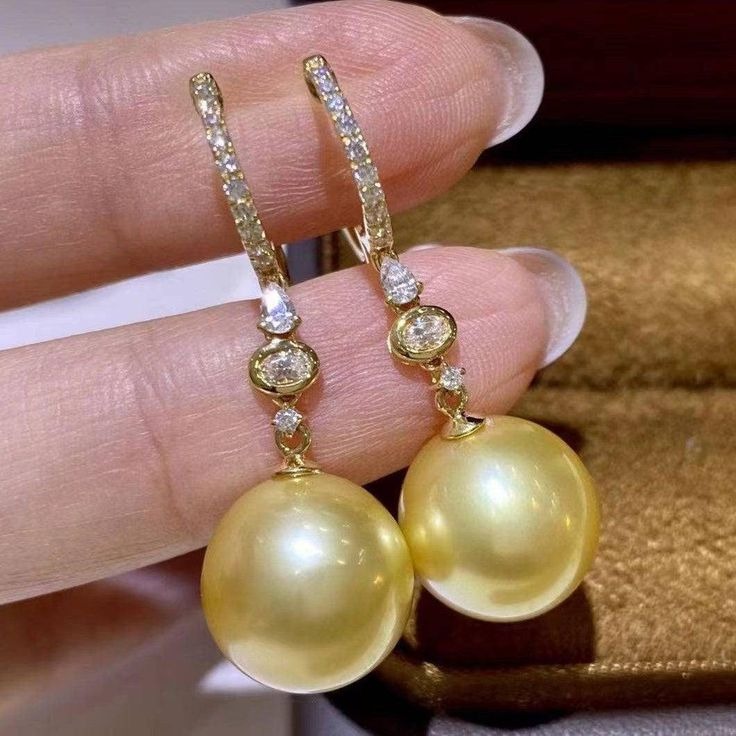
South Sea pearls are gems whose production are peculiar to Australia, Philippines, and Indonesia. Pearls like these are found in either golden or white lipped oysters and they are by far the largest pearl types.
South Sea pearls are majorly bead nucleated, which take about 2-4 years to form into pearls. Only a single piece of South Sea pearl can be harvested from a gold or white lipped oyster. This is why they are relatively scarce and costly when compared to other types of cultured pearls.
- Tahitian Pearls
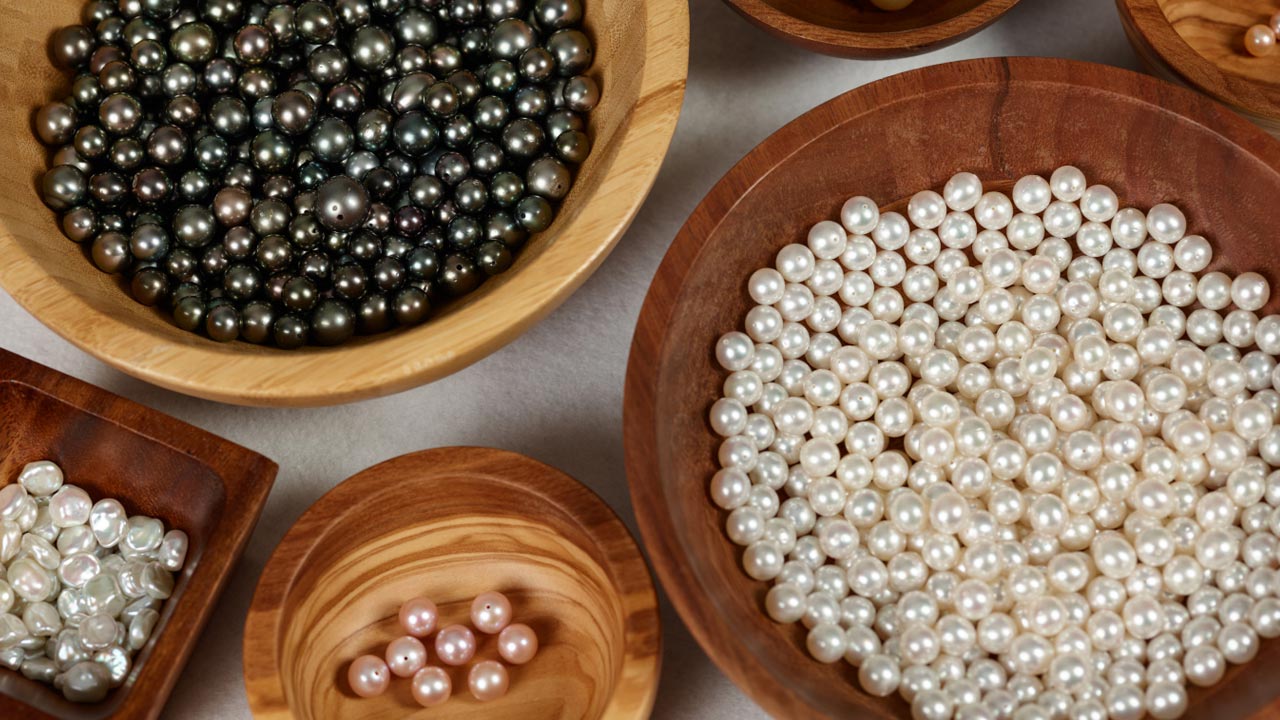
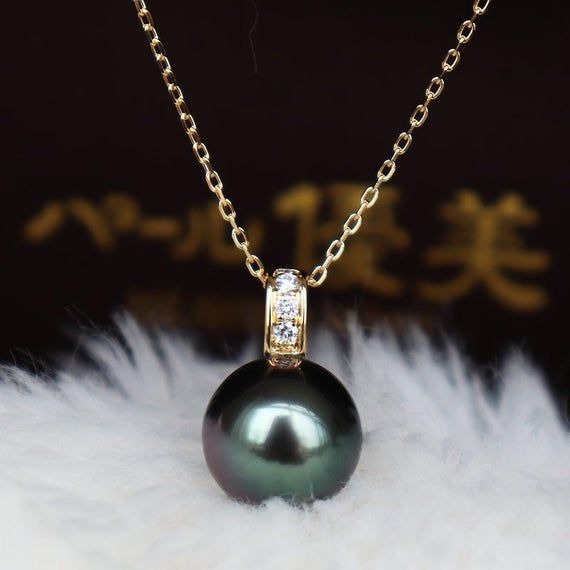
These are saltwater cultured pearls, also known as black pearls. Formed in black lipped oysters, these unique gems come in a range of dark natural colors like green, blue, grey, and brown. Their color formation is partly influenced by the amount of light available within the mollusk environment and majorly influenced by the rainbow-like mantle present on the oysters shell.
Tahitian pearls are almost as expensive as South Sea pearls. This is because they come in a wide range of colors, therefore matching them into a finished jewelry becomes easier than usual.
- Akoya Pearls
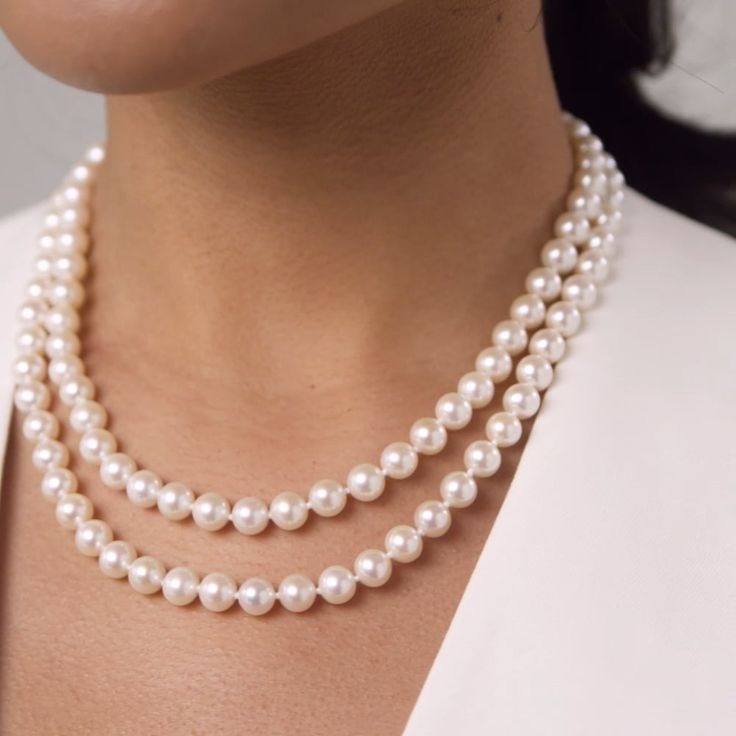
Akoya pearls are highly favoured by jewelers and pearl lovers due to their perfectly round shape. The perfect shape is attained through nucleating the oyster with beads made out of mother of all pearls and pieces of mantle tissues.
These pearls are small in size, ranging between 5mm-9mm. Akoya oysters can only produce 2 to 3 pearls at once, and they take between 1-2 years to fully develop.
How to Tell If a Pearl is Cultured or Natural?
Telling the difference between a cultured or natural pearl can be done through any of the means below:
- How Rare They Are
Pearls only form naturally in oysters by accident. Most oysters do not have the ability to produce pearls without human assistance. The few that do are not always capable of producing jewelry-worthy pearls. This makes it extremely difficult to find a strand of natural pearl on the market except in museums and auctions.
Cultured pearls, on the other hand, are dominating the market with their lustrous color and texture. They are often developed to make pearl jewelry much more available to all pearl lovers.
- Surface
Natural pearls often have imperfections, blemishes, textured surfaces, and irregular shapes. The whole body of a natural pearl is made of thick layers of nacre, which displays concentric growth lines when exposed to a concentrated light source.
Cultured pearls have a more uniform and smooth surface due to human intervention during the formation process. When held directly to a concentrated light source, their luster reflects and exposes the thin nacre layers.
Are Cultured Pearls Real?
Yes they are. Just like natural pearls, cultured pearls are also grown from pearl bearing mollusks and they contain layers of nacre on their surface. The only difference between the two is that cultured pearls involve human intervention.
How Much Are Natural Pearls Worth?
Natural pearls are worth a lot. A few years ago, a natural pearl pendant that belonged to the French queen Marie Antoinette was auctioned for a whooping sum of $32 million.
Now, how much are real pearls worth? The price of real pearls are fixed based on how long they’ve been in existence, as well as how organic and rare they are.
Are Cultured Pearls Worth Anything? Are Cultured Pearls Valuable?
Yes, cultured pearls are worth something and they are valuable. While some cultured pearls are as inexpensive as $50, some are priced above $100,000. Their value differs based on their sizes, where they are formed, and the type of jewelry they are integrated into.
Key Differences Between Freshwater Pearls and Saltwater Pearls
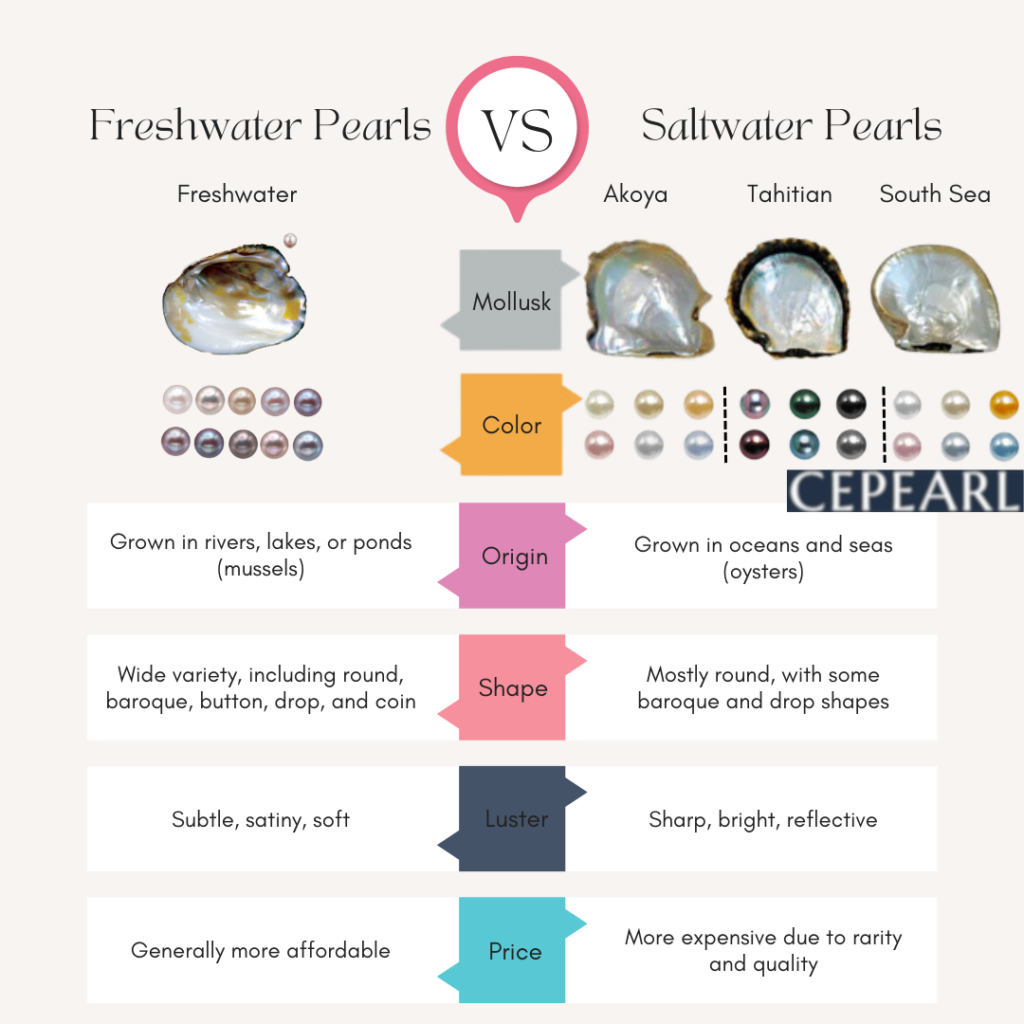
Natural freshwater pearls and saltwater pearls are extremely rare, almost all pearls sold today are cultured pearls. Here is a detailed comparison between freshwater cultured pearls and cultured saltwater pearls:
Pearl Origin
Freshwater:
Freshwater pearls were first cultured by the Japanese in lake Biwa. This was experimented shortly after the success of saltwater pearls. Commercial freshwater pearls initially appeared in the 1930s and they came out in vast colors that have not been seen in saltwater pearls. Overtime, the Biwa lake became saturated from pollutants and China stepped up to become the largest producer of freshwater pearls.
Saltwater:
Saltwater pearls are of various types and they originated from different parts of the world. The famous Akoya pearls are primarily sourced from Japan while the large, golden toned South Sea pearls originated from places like Australia, Indonesia, and the Philippines. Not to leave behind the black Tahitian pearls that originated from the French islands of Polynesian and Tahiti.
Pearl Shape
Freshwater:
Nucleated freshwater pearls appear in all sorts of shapes like round, off-round, button, and baroque. Non-nucleated ones have shapes like stick, cross, and claw.
Saltwater:
The shape of saltwater pearls depends on the irritant’s nucleation and how long it took for them to completely form. They have various shapes, such as round, near round, button, oval, drop, keshi, circular, and odd baroque.
Pearl Size
Freshwater:
Freshwater pearl size ranges from 1mm-13mm. The ones below 5mm are suitable for earrings, pendants, and other intricate designs. 6mm to 8mm are the classic size suitable for making necklaces and bracelets, while 9mm and above are most ideal for statement pieces.
Saltwater:
Their sizes depend on the type of saltwater pearl. The tiniest of all saltwater pearls are Akoya and they range between 1mm to 10mm. South sea and Tahitian pearls are bigger in size. they fall between 8mm and 20mm.
Pearl Color
Freshwater:
Freshwater pearls are loved for their natural pestle colors, which are displayed in rainbow-like forms. Their alluring natural colors include white, pink, peach, and lavender, while their overtones are either rose, cream, or silver.
Saltwater:
These pearls consist of exotic surface colors and a captivating array of multicolor overtones. All saltwater pearls have their peculiar colors. South sea pearls are known to be either white or gold color and their overtones are silver, rose, champagne or dark gold. Tahitian pearls have darker hues and their overtones appear in dark black, peacock, blue green, or purple. Akoya pearls are usually white in color with rose, cream, or silver overtones
Pearl Luster
Freshwater:
The luster of a pearl determines how light beams break up through its nacre layers. Freshwater pearl luster is visibly silky, soft, and satin-like, giving way for shimmers that help you view your own image on the pearls surface.
Saltwater:
Saltwater pearls have the best luster, most especially the Akoya pearls which are said to be mirror-sharp. Their luster is sharp and crisp with little to no hazing on their edges. Tahitian and South Sea pearls are also deep and silky due to the amount of time they spend beneath water.
Pearl Pricing and Rarity
Freshwater:
There is a large margin between freshwater pearls vs saltwater pearls prices. However, freshwater pearls are the most widely available cultured pearls and in terms of pricing, they are the cheapest on the market. Freshwater mussels are capable of producing 30 pearls at once and they are priced between $20 and $5000.
Saltwater
Saltwater pearls have some of the rarest and most prized pearls on the market. They are relatively of a higher price range when compared to freshwater pearls. The cheapest saltwater pearls can be as low as $100 while some can be as costly as $100,000.
How to Quickly Tell Saltwater Pearls From Freshwater Pearls?
- Luster
Freshwater: They typically possess more subtle, satiny, and soft luster due to their solid nacre build up.
Saltwater: Their luster shimmers in deep, mirror-like reflection with colorful overtones that reflect light from its surface.
- Shape
Freshwater: They are available in various shapes like coin, oval,button, near-round, biwa, baroque, melon, pear, etc.
Saltwater: Their most common shapes include perfectly round, near-round, button, drop, baroque, and many more.
- Size
Freshwater: Their sizes range between 1mm-12mm, but the most common are 6mm, 7mm, and 8mm.
Saltwater: They have both big and small sizes. The small ones fall between 1mm-5mm, while the big ones start from 7mm to 20mm.
Freshwater Pearls vs Saltwater Pearls: Which Pearl Type Should You Choose?
Taking into account the above key factors helps you choose the perfect type of pearl for you. The most important thing is to create a preference and back it up with sufficient budget. Both freshwater and saltwater pearls are desirable and the differences in their sizes, shapes, and luster helps to create several alternatives suitable for all pearl lovers.
Key Takeaway
Comparing Cultured pearl vs freshwater pearl is just a misconception. Freshwater pearls can also be referred to as cultured pearls. The real parameters to compare is natural pearl vs cultural pearl, and whether formed in freshwater or saltwater environments. Natural pearls are made without human intervention, but cultured pearls are formed with human intervention. While natural pearls can only be found in freshwater, cultured pearls can be formed in both freshwater and saltwater.